
Insights — Blogs and Vlogs
Come gather ‘round people…
Come writers and critics…
Come senators, congressman…
Come mothers and fathers…
For the times they are a-changin’
Because Dylan was right, the topics our blogs and vlogs cover a lot of territory. They are diverse by design.

Customer Service. Really!
My daughter accidentally left hiking boots and a sleeping bag in the overhead bin on a flight to San Francisco International Airport (SFO) over the weekend. She was running to catch a flight and called, panting, looking for help.
My daughter accidentally left hiking boots and a sleeping bag in the overhead bin on a flight to San Francisco International Airport (SFO) over the weekend. She was running to catch a flight and called, panting, looking for help.
I called the various Lost & Found numbers at the airport, expecting the usual maze of automated prompts and bogus promises that “your call is very important to us.” To my great surprise, shockingly, after dialing a few numbers, an actual human picked up.
Within minutes, Evelyn, a Customer Service Solutions Supervisor, had tracked down the boots and sleeping bag, and had both items placed in the gate's Lost & Found cabinet. I almost fell off my chair!
It was, without question, the speediest, most professional, most cordial, and most effective customer service I have E V E R received.
Stunned and deeply appreciative, I contacted Evelyn’s manager and told her that Evelyn had been incredible and, in my humble opinion, deserved a bonus, a raise, or a promotion.
And the more I thought about it, the more I realized that what impressed me wasn't simply that she solved the problem. It was that she very clearly CARED about solving it.
Evelyn took a problem that wasn't personal to her (her job, sure), figured out who could help, took quick action, followed through, and made sure the things my daughter had accidentally left behind were safe.
As we race to replace people with AI, I’ve moved from not only wondering if it will be more artificial or intelligent, to now wondering about whether it can ever care. Form the words to demonstrate caring, sure. But actually caring seems improbable.
AI is great for searching existing data and materials at warp speed. But can it ever recognize in a concerned parent’s voice that something that may seem small has great emotional importance for a young adult traveling on her own? I doubt it.
Boots and a sleeping bag are of course only things that could be replaced. But there is memory and meaning embedded in some things. And, for a moment, Evelyn reminded me that people helping other people is about more than completing a task. She restored a little of my faith in humans to do incredibly good things for one another.
Before We Talk About Climate, Talk About What People Love
Let’s talk about trees. Kids climb trees, instinctively. Kids love jumping in piles of leaves. Adults are wowed by leaves falling to the ground in autumn. Everyone knows what a tree is, without any explanation. People have relationships with trees.
Let’s talk about trees. Kids climb trees, instinctively. Kids love jumping in piles of leaves. Adults are wowed by leaves falling to the ground in autumn. Everyone knows what a tree is, without any explanation. People have relationships with trees.
In addressing the climate challenge, this gives trees unique standing.
Humor me for a moment. Close your eyes and imagine a tree. I bet as soon as you did that, your brain constructed an image—and probably began to tell you the story of a tree. Now try that with methane, the most potent greenhouse gas.
The difference in those two experiences offers a vital clue to what is and is not happening in the global conversation on climate. Mostly, we’ve been telling people how important climate is—the risks and dangers, the temperature limits, oceans warming, the crisis.
Rather than starting with climate, why not listen to what people already care about and then help link that to climate? That way, we do the work of reaching out to where people already are rather than asking them to do the work and come to our issue.
Trees and forests are a great example. They’re major carbon sinks, providing an enormous array of ecosystem services, from providing shade to limiting soil erosion.
People love trees for everything from hunting to forest bathing. They’re local and global, visible and recognizable, and beloved across the political spectrum. They can be a destination, a livelihood, a source of beauty, or a part of our memories. They matter to people for reasons that often have little to do with climate.
The Multi-Sensory Climate Center has recently initiated a project to map the emotions that connect people, climate, and trees. (For now, the focus is Maine and Minnesota.) Just imagine all the other issues people care about that could be entry points for a conversation about climate. Christopher Moscardi and his team at EPIC have it right in emphasizing that it’s our job to make climate change “relevant to people in their everyday lives.” Earth Public Information Collaborative
If it’s not seen as relevant—but either as hoax or hopeless—why should people engage?
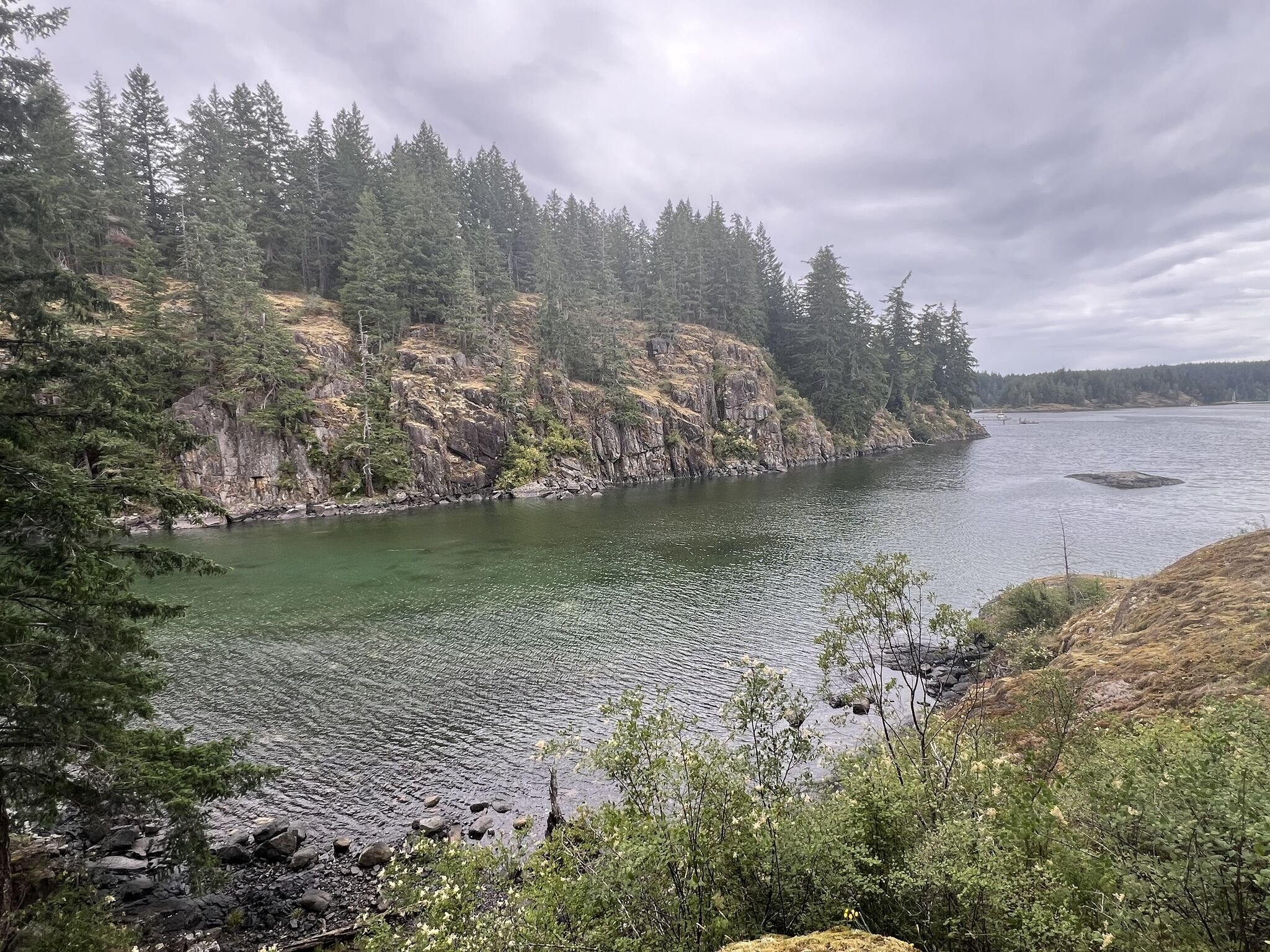
(The pictures below are from my time with trees.)





What Turns Outrage Into Change?
Insistent, sustained, clear, and effectively communicated public outrage has always been an essential force behind systemic change in democratic societies.
Insistent, sustained, clear, and effectively communicated public outrage has always been an essential force behind systemic change in democratic societies. This is not to deny the power of invention—the mobile phone being an obvious example—nor does it downplay the importance of legal and policy decisions.
From seatbelts to tobacco, civil rights to marriage equality, littering to the nuclear freeze—and across the spectrum of water, air, and other environmental protections—insistent, sustained, clear, effective, and repeatedly (!) communicated public outrage has been key.
Without the activating power of public outrage, major social institutions like courts and legislative bodies tend toward the status quo. But when the unbelievable happens every day, how do we express outrage in meaningful ways?
By focusing. Pick one thing that makes you crazy—the thing keeping you up at night, the thing you can’t stop talking about. Write down how you feel. Define the emotion behind it. Unpack that. Read about what others are doing. Do one small thing to lean into your desire to act. Call a friend. Write a letter. Post on social. Go to a meeting. Get started.
It’s all connected, of course, and the barrage is intended to overwhelm and paralyze us. But when we pick something that really touches us, that’s the issue that can sustain our outrage.
Even then, public outrage by itself isn’t enough. Landmark court decisions (Brown v. Board of Education), the passage of key legislation (Civil Rights Act of 1964), revelatory publications (Silent Spring), scientific findings (Hansen’s 1981 paper in ‘Science’), inspiring and courageous leaders (too many), corporate malfeasance (tobacco companies), socially responsible businesses (Patagonia), risk communication (warning labels on cigarettes), voices of morality and religion (U.S. Conference of Catholic Bishops)—all have been critical pivot points in driving massive social change.
Where and how these waves of change flowed and interacted varied. Yet, the activating power of public outrage was crucial in all cases. In each situation, the facts mattered. But alone, neither were they enough.
Underlying emotions and deeply held values are the fuel that ignites public demands for change—and unites us as well. Remember:
- Continuing to force Black people to sit in the back of the bus became morally abhorrent.
- Smoking shifted from being “cool” to being viewed as dirty and unhealthy.
- Tossing cans out car windows on the highway became embarrassing.
- Not wearing a seatbelt came to be seen as foolish.
Climate is the challenge of our generation. Now is the time for us to write the history of how we too will overcome seemingly insurmountable obstacles, to secure a stable climate for the future.
Change is inevitable. Having the power to steer it is the challenge. Whoever controls the narrative wins—and effective narratives are grounded in emotions.
Help us change the climate narrative:
How Small Changes Become Systemic Change
The challenges and opportunities of climate change are actually one and the same. Because the causes and consequences are everywhere—literally, from shifting allergy seasons to extraordinary wildfires.
The challenges and opportunities of climate change are actually one and the same. Because the causes and consequences are everywhere—literally, from shifting allergy seasons to extraordinary wildfires.
But this means that everyone has a role to play. What you eat, how you move from place to place, and who you vote for all matter. And, of course, no one person buying a hybrid car is going to change the world. But it still matters. Often misquoted, Gandhi’s insight was spot on about the connections between individual, community, and global change: “If we could change ourselves, the tendencies in the world would also change.”
And if we tell people about our personal change, they change a little too, and then they tell someone else, and so on. “Tendencies” don’t make policy, however. (Neither does posting on LinkedIn make the internet.)
But waiting for policy change to solve the problem is a self-defeating fantasy. Massive, systemic social change never starts with the institutions holding power. If you have power, what’s the incentive to change the system that helped you accumulate it? Einstein nailed this one: “We cannot solve our problems with the same thinking we used when we created them.”
So where do we start? We start where we are, right now, focusing on what matters to us—what we dream about for our kids, where we feel empowered, and where we feel confident.
Some years back, I created the Nuclear Weapons Discussion Project and published Action for Arms Control—an A-Z listing by profession of what one person could do to help reduce the risk of nuclear war, first acting alone and then acting in community. Like an airplane on the runway, getting rolling is the hardest part.
On climate, if you’re looking for help, guides, and ideas, consider:
- Project Drawdown: https://jointheshift.earth
- Climate Emotional Resilience Institute: https://lnkd.in/e-t6v34f
- Climate Mental Health Network: https://lnkd.in/eVmnaY5s
- Climate Psychology Alliance of North America: https://lnkd.in/eEUHAWmD
- TEVEL: https://www.tevel.earth
- Project InsideOut: https://reneelertzman.com
- Climate Junction: https://lnkd.in/eXw4wiAm
Whether you’re an accountant or a zoologist, you can make a difference.
Project Drawdown • Climate Emotional Resilience Institute • Climate Mental Health Network • Climate Psychology Alliance of North America • TEVEL • Project InsideOut • Ecopsychepedia
Measuring What Matters
In business, and in life, we do what we measure. And we’re better at measuring some things than others. How well do we measure the emotions of our team members? How good are we at even understanding our own emotions?
In business, and in life, we do what we measure. And we’re better at measuring some things than others. How well do we measure the emotions of our team members? How good are we at even understanding our own emotions?
I've been listening and talking about these questions over the last ten days with a range of innovators, scientists, and creative practitioners. This is part of our project building a new foundation for public engagement around climate change, grounded in a deep understanding of emotions. Here's an earlier post with links to the Multi-Sensory Climate Center.
In this wave of discussions, my first stop was Seattle. During the on-stage brain dissection at an Evening with Neuroscience at the University of Washington, neuroscientists explained in very unemotional terms how emotions are “layered into” the developing brain. And my daughter, Isabel Halperin, led the student group this year that organized the campus-wide event, attended by more than 400 people.
I learned a lot about emotions and also had a strong emotional response. How do we, as parents, measure pride in a child’s success?
Next, I had a fascinating afternoon with Mor Keshet from Tevel, a social scientist, therapist, and innovator in studying human behavior and emotions. She is doing deeply insightful work, calling attention to the power of nature to improve mental health. As she observes, biomimicry need not be limited to the physical. It can be much more than extraordinarily careful research on how birds actually fly, leading to the redesign of airplane wings. How much can we also learn from nature about how to redesign aspects of our mental well-being?
Think for a moment about some of the words we typically apply to human activities: community, connection, diversity, balance, and so forth. They might also be applied to the natural world around us. But when was the last time you heard about a community of trees? If we are attentive, it's likely there are profound learnings to be found in nature.
Revealing connections that we can’t see links back to UW, where The Golden Lab is gaining a deeper understanding of how social analgesics can reduce pain -- and how that may vary across the sexes. How do we measure the value of social analgesics as compared to using pharmaceuticals for pain reduction?
Looking not through microscopes at brain tissue but toward the future with telescopes, I also learned a lot from Cat Tully, founder of the School of International Futures (SOIF) in London. In a lovely inversion of what one might expect, the school helps “transform the present using structured thinking about the future.”
Seeing beyond the obvious and taking people to places they have not been (either physically or emotionally) is also the focus of the remarkable photography of J Henry Fair. I had planned to join Henry in Davos at the World Biodiversity Forum next month for a panel on “Art Explaining Science.” But it conflicts with my daughter’s graduation in Seattle.
And my visit with Paulette Cole at True North in the Hudson River Valley was also rich with the experience of how our external, built environment can open windows into our own feelings and emotions. We all know from personal experience that the built environment has a major impact on our mood and mindset. Are the connections between our internal and external worlds so vast that perhaps the two worlds are one and the same?
Finally, and not far from Hudson, NY, Charles Potter, Kate Leavitt, and the team at the Seacoast Science Center in NH are also creating opportunities for people to better understand how we are connected -- in this case to oceans and what we can learn from them. We are in the early stages of discussing how the Center’s plans might align with the Multi-Sensory Climate Center, going beyond mental understanding to reveal underlying emotional drivers.
At the core of this project is our active collaboration with Orfield Laboratories, Inc., Emma Orfield Johnston, Steven J. Orfield. We are building the foundation for an entirely new narrative around avoiding catastrophic climate change. Which I prefer to reference as the opportunity to maintain climate stability. For 50+ years, Orfield Labs has been developing, refining, and applying a unique methodology for surfacing emotions that we often don’t know are driving our behavior.
Is your organization measuring its real priorities, using measurement as a guide to the future rather than as a record of the past? Are you, your teams, and stakeholders emotionally engaged or overwhelmed and checked out? If you want to better understand how underlying emotions influence the behavior of colleagues, clients, customers, funders, and other people you care about, let's talk.
What Two Coups in Moscow Taught Me About Leadership
I managed a company through two coups in Moscow. It taught me something most leadership books miss.
I managed a company through two coups in Moscow. It taught me something most leadership books miss.
Two coups. Tanks firing on the (Russian) White House. Recovering funds that vanished from bank accounts. Political retribution. Visits from all manner of security services.
Seventeen years building and running a company before, during, and after the collapse of the Soviet Union will change how you think about leadership.
A few learnings that feel uncomfortably relevant right now as we lurch from one crisis to the next:
1. Decision-making
In high-risk, fast-moving situations, assume that the first information you receive is likely to be wrong or incomplete. Don’t ignore it. Don’t shoot the messenger. Move fast but verify accuracy faster. Acting on flawed information is always a bad decision.
2. Information abhors a vacuum
If you don’t fill open space with credible information, inaccurate information will flood the space. Leaders make this mistake all the time: they open a difficult conversation, then retreat when it gets uncomfortable. That’s when misinformation takes over.
3. You don’t own your brand
You lease it from your customers and stakeholders.
And they can rewrite the terms overnight. In an environment increasingly shaped by misinformation and distrust, your license to operate might expire faster than you can imagine.
If you can’t see around corners, you’re already behind.
4. Know your non-negotiables
Anticipate emerging risks. Figure out what you don’t know. Draw your redlines now. If you wait until you know you need them, it’s too late to define them. If someone on your board, leadership team, or staff pops up in the Epstein files, what’s your plan? Denial is not a plan. Silence isn’t neutral.
One moment that’s always stayed with me. After a meeting with a Fortune 100 company, a colleague walked into my office with that look—half amused, half stunned. They had asked her to describe a time she had to think “outside the box.”
She laughed.
“What box?” she said.
“In the Soviet Union, everything was outside the box. There was no box.”
That’s the point.
Most leaders are still operating as if the box exists.
But it doesn’t. Accepting that reality, today is key to success tomorrow.
What Box?
The pressure on leaders to ‘do something’ is intense and unrelenting. "Change that language." "Have legal look at that first." "That approach won’t work anymore."

The pressure on leaders to ‘do something’ is intense and unrelenting.
"Change that language." "Have legal look at that first." "That approach won’t work anymore."
Running a company for 17 years before, during, and after the disintegration of the Soviet Union taught us a few things about navigating in a volatile climate.
Two coups. Tanks firing on the (Russian) White House. Recovering funds that vanished from bank accounts. Political retribution. Visits from all manner of security services.
Some of what we learned then can help leaders today reduce risk to themselves and to their organizations.
1. When managing a critical situation with high risk and a short fuse, assume that the first information you receive has a greater than 50% chance of being wrong or incomplete. Do not ignore it. But verify its accuracy – and fast – before making a decision.
2. Information abhors a vacuum. Don’t open up a difficult conversation and then exit if it becomes challenging. Unless you manage the space you created, bad information will surely flow into it.
3. Remember that you don’t own your brand. You lease it from your customers and stakeholders. And they can change the terms remarkably quickly, revoking or limiting your license to operate. Tune your early-warning systems for this age of misinformation and disruption. Make sure you can see around corners.
4. Make sure your non-negotiables are clear and cover emerging risks. For example, if a member of your board, leadership team, or staff pops up in the millions of documents related to Epstein, what’s your plan? Prepare. Now.
After a meeting with a Fortune 100 company, a colleague came into my office with that smile we all know: something’s up, might be funny, might be unbelievable, but it’s going to be good. She was asked during the meeting to share a situation where she needed to act ‘outside the box.’ Breaking into laughter, she told me her response. “What box? In the Soviet union, everything was outside the box. There was no box.”
Corporate Social Responsibility 2.0
The leaders of our most prestigious corporations can’t have it both ways. Having been granted status as ‘legal persons’ in 1886, corporations have the right to “free speech” that cannot be abridged.
The leaders of our most prestigious corporations can’t have it both ways. Having been granted status as ‘legal persons’ in 1886, corporations have the right to “free speech” that cannot be abridged. And they exercise this right all the time through lobbying, advertising, social media and so forth (even thought that status resulted from a courtroom fluke, about which more later). And virtually all of that commercial advertising speaks to personal behaviors and public issues that have clear connections to the cultural and political context of the moment.
But now, when it comes to speaking out about the destruction of democracy in America, to the killing of American citizens by federal agents in riot gear, wielding weapons generally used only in combat, the voices of corporate leaders are barely audible. And when forced to say something, it is generally a garbled whisper – as most companies duck behind the cover of needing to not enter into politics. All the while, corporate lobbyists swarm Capitol Hill and executive agencies wielding political power to shape laws and regulations.
Destruction of American Democracy
When the history of the Trump Era is written, which companies and associations will be listed as enabling the destruction of democracy in America?
Which listed as speaking out? Which listed as remaining silent?
Which are helping pay, literally, for the destruction of the East Wing of the White House?
Which CEOs approved donations to the Trump inauguration?
Which companies are using shareholder capital to the tune of $1,00,000 for explicit access to the President, under the guise of it being a present in celebration of the nation’s 250th birthday?
I know that ESG, corporate social responsibility, the “triple bottom line”, DEI, and all manner of other corporate commitments to do more than turn a profit are being cut back or buried.
Where are our business leaders with courage, with a determination to protect long-term brand and shareholder value?
Companies That Supported the Nazis
Businesses need to speak and act now. No one wants to ever be included on a list similar to the one below -- of companies that supported the Nazi takeover of Germany.
Allianz, Audi, BMW, Chase, Coca-Cola, Deutsche Bank, Ford, General Motors, Hugo Boss, IBM, JAB Holding, Krupp, Lufthansa, Mercedes, Nestle, Porsche, Siemens, Standard Oil, Volkswagen.
I know that these companies today are not run by the same people that started them.
I know that was then and this is now.
I know that some firms and families have issued profoundly sincere apologies.
I know that America is not Nazi Germany.
xxx thes companies xxI am not calling anyone a Nazi.
Yet the history of these corporations are intertwined with what Milton Mayer describes as “the pressure of combined reality and illusion.” In 1955, after extensive research and interviewing in Germany, Mayer authored “They thought They Were Free.” And with frightening prescience wrote the following.
“Now I see a little better how Nazism overcame Germany.... It was what most Germans wanted—or, under pressure of combined reality and illusion, came to want... I came back home a little afraid for my country, afraid of what it might want, and get, and like, under pressure of combined reality and illusion. I felt—and feel—that it was not German Man that I had met, but Man. He happened to be in Germany under certain conditions. He might be here, under certain conditions. He might, under certain conditions, be I.”
It is time for business leaders to lead. To preserve shareholder value, to stay ahead of the growing movement to boycott, to preserve personal integrity, and to show what it really means to be a patriotic American.
Especially now, under pressure of combined reality and illusion.
Obama’s Lesson in Handling Disruption
Want to know a common leadership risk that’s easily fixable? Overreacting to a small group that sounds louder than it actually is. Stop doing that and see what happens.
Want to know a common leadership risk that’s easily fixable? Overreacting to a small group that sounds louder than it actually is. Stop doing that and see what happens.
In tense moments, it’s easy to conflate volume with influence. A few loud voices can trigger a full-blown response, pulling leaders off course and burning through resources.
Most of the time, your loudest critics don’t have the leverage to deliver on whatever worst consequence you’ve imagined. It’s important to distinguish between individual noise and broader stakeholder sentiment.
President Obama understood this. In fact, he was quite deliberate in managing moments like this. Masterful.
When interrupted at public events, Obama didn’t swing wildly or retreat. Based on research our team conducted, he followed a very consistent pattern: Acknowledge the person(s). Maintain control by engaging, quickly and assertively. Interrupt them when needed. Offer an alternative kind of communication. Stay with the room.
He didn’t confuse disruption with power. He focused on the real audience, not the distraction. And that discipline made all the difference. Granted, having the Secret Service at his side helped. But the systematic approach is a model worth following.
Consequence & Probability
What’s the riskiest thing you did this week? Maybe you crossed the street when the sign read, “Do not walk.” Risky? Technically. But if you judged the moment, it probably wasn’t a big deal.
What’s the riskiest thing you did this week?
Maybe you crossed the street when the sign read, “Do not walk.” Risky? Technically. But if you judged the moment, it probably wasn’t a big deal.
That’s the essence of risk. It’s not just what could go wrong, but how bad it would be and how likely. Risk is the intersection of consequence and probability.
Think about an old boiler keeping your building warm in winter. It hums along quietly. Seems fine. But if it fails, the impact is massive. Low probability, yes, but high consequence.
It’s helpful to think of risk on an XY axis. You generally want to operate in life in the low-probability, low-consequence quadrant. Unless you’re doing it intentionally, you want to avoid high-probability, high-consequence. But the real problem is in mistaking one quadrant for another.
Because we confuse consequence with likelihood. And that confusion can be expensive.
Like when a handful of critics triggers a disproportionate response. You assume catastrophe. So you spend time, energy, and credibility neutralizing a threat that truly might have dramatic consequences… but with a miniscule chance of materializing.
This is fear overwhelming inquiry and analysis. Thus the key point is missed. Could those critics even pull off what would indeed be a worst-case scenario? If the probability is tiny, then no, and you’ve just spent valuable leadership capital on a paper tiger.
Calculate risk. Don’t assume it.
Get into the habit of evaluating risk. It’ll save you time, money, energy, and anxiety.
👇 Less than a minute on how to think clearly about risk, so you can lead better.
Hearing Is Easy. Listening Is a Strategy.
There’s a big difference between hearing and listening. Hearing is a physiological function. Listening is a strategic act. It requires focus, curiosity, and the willingness to be changed by what you learn. And in stakeholder engagement, that difference matters—a lot.
There’s a big difference between hearing and listening. Hearing is a physiological function. Listening is a strategic act. It requires focus, curiosity, and the willingness to be changed by what you learn. And in stakeholder engagement, that difference matters—a lot.
Because engagement alone isn’t the goal. Connecting is. When stakeholders feel understood—and see their views taken into account—you build more than buy-in. You engender trust.
The most effective leaders follow a clear rhythm:
Ask.
Listen.
Plan.
Explain.
Deliver.
Anticipate.
In the commercial world, Amazon rules. Ever called customer service at Amazon? You get to a real person who solves your problem light years faster than you do at your bank or airline. It’s transformed how we order products—and married that with effective human touch when people want that. Who calls hoping to reach an automated answering system? The same people who wash their rental car. Which is to say, no one.
Like it or not, we can all learn a lot from Amazon. Especially now, when trust is brittle and attention is fractured, delivery is paramount. Listen deeply. Deliver quickly. And take the call when you’ve screwed up. Because it’s then that stakeholders are really paying attention to your leadership.
The Business Case for Emotion
Logic may be praised in the boardroom, but billion-dollar consumer brands rest on a foundation of emotion. “All other things being equal” (ceterus parabus) is a handy perspective to adopt when you want to limit the variables in your analysis. But in the real world, human behavior is stubbornly, and wonderfully, irrational and hard to predict.
Logic may be praised in the boardroom, but billion-dollar consumer brands rest on a foundation of emotion. “All other things being equal” (ceterus parabus) is a handy perspective to adopt when you want to limit the variables in your analysis. But in the real world, human behavior is stubbornly, and wonderfully, irrational and hard to predict.
People respond to emotion. We buy based on it. We decide based on it. We stay or leave jobs because of how we feel—about the work, the mission, and the people. (And the compensation, for sure.) Thinking is part of decision-making, but it’s assuredly not the whole deal.
We’re emotional beings living in a multisensory world.
The most effective companies already know this. Advertisements, packaging, sounds, and scents spark emotions. The smells of fresh coffee, chocolate chip cookies, or baked bread trigger feelings more effectively than a billboard ever will.
We are more deeply and immediately affected by our senses and emotions than we are by cold, hard logic.
Emotions rule at the point of sale and the more we learn about human behavior, from the social sciences as well as neuroscience, the more clear it becomes that emotions drive behavior more broadly.
And while facts remain as facts, and profoundly important in our denialist and anti-scientific political climate, they will increasingly become the domain of artificial intelligence.
Emotional intelligence will be the engine of strategy in the near future. Emotions are an asset—unless we’re too 'businesslike' to admit it.
I’m not suggesting swapping spreadsheets for marshmallows. But let's be honest about the vital role emotions play in our decision-making process.
So let me ask: How are you building emotions into your strategy?
Who Bears the Cost of Risk?
Risks get a bad rap. We often treat them like problems to avoid rather than as behavior and design challenges. The issue isn’t whether risk exists, but who bears the cost and who reaps the benefits. In our current system, that cost of burden often falls on the shoulders least equipped to carry it.
Risks get a bad rap. We often treat them like problems to avoid rather than as behavior and design challenges. The issue isn’t whether risk exists, but who bears the cost and who reaps the benefits. In our current system, that cost of burden often falls on the shoulders least equipped to carry it.
Consider nuclear power, which is experiencing something of a comeback as a form of renewable energy. When the industry emerged, private insurers walked away. Too risky. So the government stepped in. Through the Price-Anderson Act, liability was capped and public backstops were put in place. Without insurance, no one would build or operate a nuclear power plant. And when touted as environmentally friendly, the risks to uranium miners and the environment are often ignored.
Public systems absorb private risk to enable large-scale growth, while everyday people often pay the price when those risks materialize. (Like the thousands of Navajo men who worked the mines in the Four Corners area, now home to a 1,500-megawatt nuclear power station.) But today, as climate disasters accelerate and agricultural systems strain, we’re watching that model reach its limits.
As climate disasters become more frequent and intense, the insurance industry itself is at risk. If too many climate-related claims—covered under policies insurers have already written—come due at once, the commercial insurance industry collapses. Insurers have nowhere near enough capital to cover the value of that many claims.
Allianz’s Günther Thallinger warned us last year that not only would the insurance industry go belly up, so would the capital markets. Because no commercial company is going to do squat without insurance.
In agriculture, a similar misalignment is playing out. Farmers shifting to regenerative practices—doing the hard work of ecological repair—face great risk as they transition. But traditional financing structures are built for scale rather than resilience. As a recent white paper from Transformational Investing in Food Systems (TIFS) makes clear, the issue isn’t the farmers. It’s the financial infrastructure that hasn’t evolved.
We tend to treat risk like a glitch in the system. But often, it’s the clearest signal of what needs to be redesigned. Without a willingness to take risks that drive change, innovation dies. Because things that people don't understand, they don't want to insure.
If we want to build resilient, equitable systems, we have to start by asking better questions. It can no longer be, “What’s the risk?” Instead what needs to be asked is, “Who’s carrying the costs of risk and who's enjoying the benefits and why?” That’s the balance we need to strive for.
Redesign systems around what’s fair for many, not just what’s profitable for few.
Artificial or Intelligent?
AI may soon render facts obsolete. Not because they cease to exist, but because, increasingly, they don’t hold the power they once did.
AI may soon render facts obsolete. Not because they cease to exist, but because, increasingly, they don’t hold the power they once did.
First, we stopped remembering. Search engines could answer any fleeting curiosity. Then came algorithmic echo chambers with customized news cycles, so we stopped questioning. Now, with AI, we may stop understanding altogether.
If we take the phrase "artificial intelligence” literally, as meaning intelligence that is not real but artificial, then maybe we open a new way of considering what it means for the future.
AI is shrinking the space between knowledge and information. So rather than generating new and better results, it may blur the essential distinction between the two—and that would, of course, be a loss from which we might never recover.
AI can pull up every answer. But not every answer matters. If you can surface any factoid in seconds, whether it’s right or wrong, do you ever really know it?
In very general terms, we are being trained to trust the confident voice of a machine, regardless of whether it’s right. And in doing so, we risk replacing discernment with dependence and facts with convenience.
But reality isn’t going anywhere. If someone stands on a skyscraper and says, “I believe I can fly,” I’m still betting on gravity every single time.
Leaders can no longer assume facts will speak for themselves or that truth will hold on its own. They must take deliberate action to ground their organizations (and themselves) in what is real.
Because facts are going to bend more than they ever have, it’s up to today’s leaders to make sure the truth doesn’t break in the process.
Don’t ask more questions. Ask the right ones.
The average consumer is drowning in digital noise. Create an account. Accept cookies. Confirm your email. Opt out (again). Algorithms track every click while curated ads chase us across platforms. For all the talk about data, many organizations still fail at the most essential task—actually understanding the people they’re trying to reach.
The average consumer is drowning in digital noise. Create an account. Accept cookies. Confirm your email. Opt out (again). Algorithms track every click while curated ads chase us across platforms. For all the talk about data, many organizations still fail at the most essential task—actually understanding the people they’re trying to reach.
And that’s when carefully focused, strategically planned research really counts.
To be clear, there are many kinds of research, from mystery shopper to opinion surveys. All can be quite useful depending on your situation, budget, purpose, and so on. But today, let’s talk about survey research. Done well, it can unlock unseen opportunities. Done poorly, it generates noise.
Beyond surfacing opinions and top-of-mind-answers, what we’ve often done with clients is identify and then focus on understanding underlying motivations. Especially when one’s operating environment frequently changes and feels unpredictable, asking a regular battery of questions to see shifts over time can feel counterproductive.
First, people get tired of answering questions they’ve seen before. Second, it becomes very difficult to discern why responses might shift. Is it caused by a change in opinion or in context?
So instead of falling down this rabbit hole, one underlying motivation we’ve explored for clients is risk.
But you can’t just ask someone, “Are you risk-averse?” and expect a useful answer. Most people don’t think that way. So we design questions to reveal something deeper—having tested, refined, and fielded surveys with a variety of clients. And guess what? It works.
Understanding how different groups perceive and respond to risk can become the scaffolding for how we shape communications. We obviously never advise a client to say, "Hey, risk-averse people, here's a message just for you!" But knowing how different stakeholder groups think about risk can enable more nuanced, more engaging, and more effective messaging—and even help anticipate and fully engage stakeholders in the future.
With tools like SurveyMonkey, anyone can run a poll. But that doesn’t make everyone a researcher—just like having a camera doesn’t make someone a photojournalist. A good survey isn’t just a string of questions. It’s a strategic research tool designed to illuminate what your stakeholders really think, so you can make decisions that actually align with reality.
Yet time and again, even smart, effective leaders start in the wrong place. They begin by writing questions instead of asking, “What are we trying to accomplish? How will we use what we learn? What problem are we actually solving for?”
Without that clarity, survey results can mislead more than they help.
With Appreciation
As we close out 2025, I’d like to thank the following people and organizations for continuing to lead with determination, creativity, and spirit
As we close out 2025, I’d like to thank the following people and organizations for continuing to lead with determination, creativity, and spirit—fighting for sustainability, a stable climate, and democracy at a moment in history when all are profoundly at risk.
Thank you, Brandon Kramer and Lance Kramer, for directing and producing “Holding Liat”—a film short-listed for an Oscar that tells a deeply human story through the difficult, unbearable reality of a couple taken hostage by Hamas militants in Gaza. And thank you to the courageous Beinin/Atzili family for inviting filmmakers into their lives during such a harrowing time.
Thank you to Illinois Governor JB Pritzker, California Governor Gavin Newsom, and Ceres CEO Mindy Lubber for standing firm—for being smart, strategic, and unflinching in the face of personal and institutional attacks. Your leadership defends not just policies, but the very principles of democracy and social progress.
Thank you to Peter O'Driscoll and the team at the Equitable Food Initiative (EFI) for conceiving, designing, implementing, and now taking internationally a systemic change in how we compensate farmers who grow specialty crops—and doing so in ways that is a win-win for farmers, for the retailers who sell their harvest, and for all of us who eat fruits and vegetables.
Thank you to George Mason University President Gregory Washington, who has stood strong and determined in the face of repeated and relentless attacks by the Trump Administration, and who continues to stand firm in defense of academic freedom and social justice.
“Thank you” seems like such an easy thing to say or write. But speaking it out loud evokes powerful emotions. When we find ourselves wondering, “What in the world can I, as one person, possibly do?,” make a list of three people. Write to them, text them, or call them. Tell them why you’re grateful. Be sure to tell them that you see what they’re doing and how it's making the world a better place. It will help them—and you.
That View Has Value
Have you ever wondered about the value of a clear day over the Grand Canyon?
Have you ever wondered about the value of a clear day over the Grand Canyon?
That view you’re enjoying isn’t just beautiful. It’s a public good. And something like pollution from a nearby power plant would impede your enjoyment. The irresponsible commercial or industrial culprit should be penalized, no?
Public goods are meant to be shared. By definition, one person enjoying a public good doesn’t diminish another’s ability to do the same. Think of streetlights, public parks, the air we breathe, and, yes, the view from a canyon rim in a national park.
So when narrow-minded corporate actors distort or diminish the value of those shared resources—and don’t pay for their respective damage—it’s theft.
When new skyscrapers block a long-standing view, developers pay for air rights. Since big trucks wear down public roads at a much higher rate, they pay the Federal Heavy Vehicle Use Tax. That’s how we acknowledge disproportionate impact and preserve equity.
Yet too often, companies with a reductionist view of their social responsibility extract value from public goods without paying for it. And when we permit or encourage the privatization of a public good, it's essentially a corporate gift. And that is, simply put, stupid and wrong.
So while the transaction may be invisible, the impact certainly isn’t. And by the time we tally the true cost, it’s usually too late.
Watch the video to see what I mean.
Loving Karma
What a welcome break from the cascade of bad news!
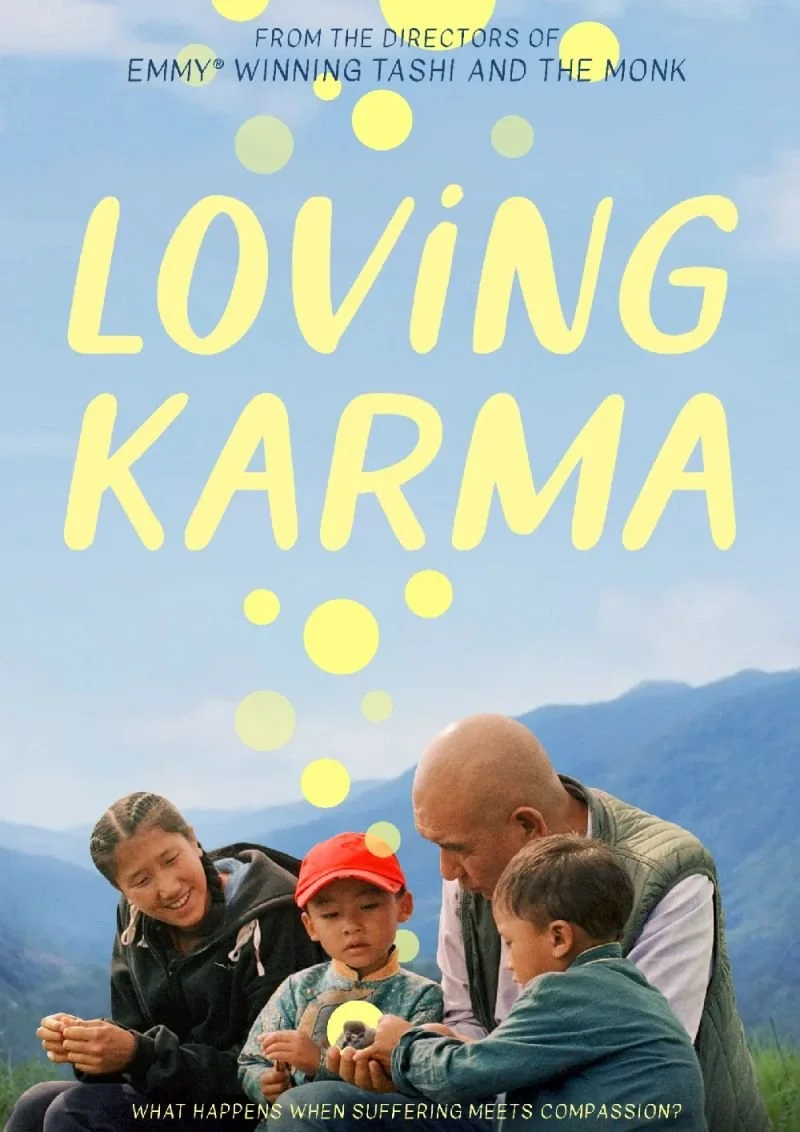
Honored to have been invited to a screening of “Loving Karma,”
What a welcome break from the cascade of bad news!
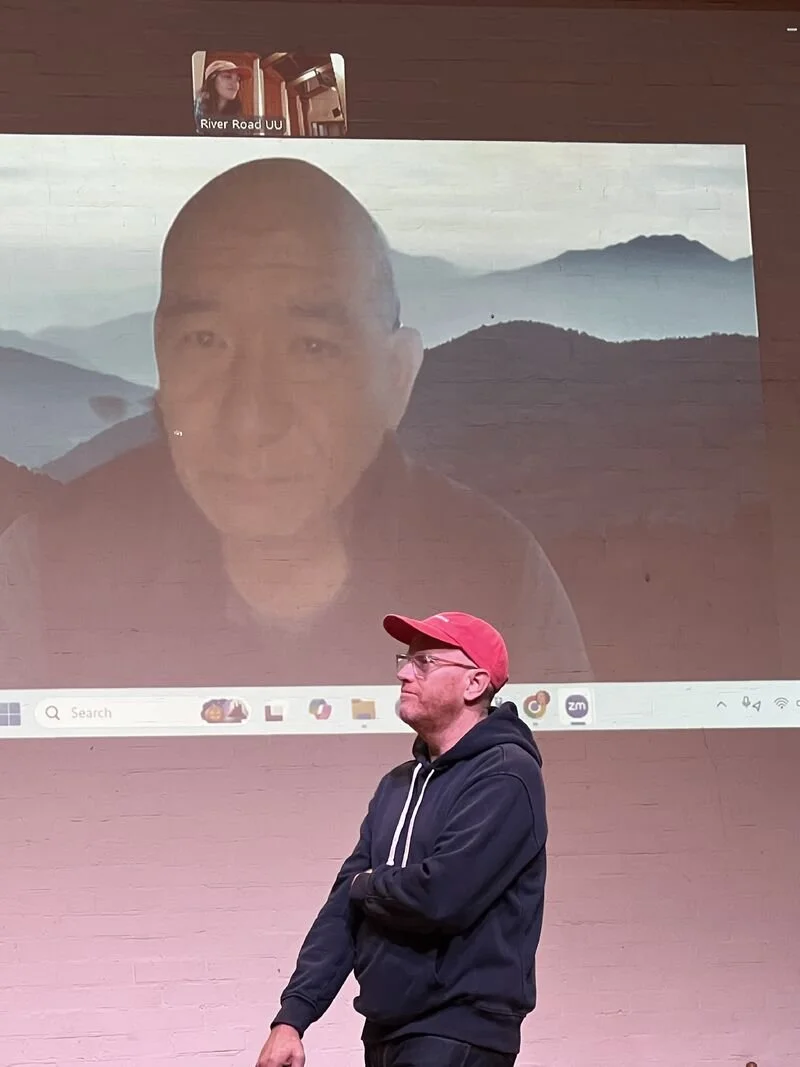
Honored to have been invited to a screening of “Loving Karma,” the soon-to-be-released film from Andrew Hinton and Johnny Burke, who brought us the Emmy-winning documentary, “Tashi and the Monk.” And to have a chance to see and talk with the Monk himself, Lobsang Phuntsok!
The film poses a profound question that is also perfect for this moment: "What happens when suffering meets compassion?”
If you have the chance to see “Loving Karma,” I highly recommend that you do.
Trumpian Revenge
As if further evidence was needed of Trump’s vengeful character, his latest target is the 40+ million American citizens who don’t know where they’re going to get their next meal.
As if further evidence was needed of Trump’s vengeful character, his latest target is the 40+ million American citizens who don’t know where they’re going to get their next meal. The Trump administration has warned that the SNAP program will run out of money this week, because he wants to use it as a bargaining chip for negotiations on the government shutdown.
Most people on SNAP are seniors, kids, or people with disabilities. Could you survive on $6/day? Take 3 seconds to think about that. The average ‘benefit’ is $6/day. And we need a new ballroom at The White House?
Here’s a short explainer we made some years ago with the producers of "A Place at The Table."
NYU Center for Sustainability Business
In a moment when many institutions are drifting, one is staying the course. That’s because one leader had the insight and determination to build it right, including gathering a team and partners with both talent and diverse experience.
In a moment when many institutions are drifting, one is staying the course. That’s because one leader had the insight and determination to build it right, including gathering a team and partners with both talent and diverse experience.
I’m in New York this week to honor a special kind of leader. Tomorrow marks the final Advisors meeting for the NYU Stern Center for Sustainable Business (CSB) under Founding Director Tensie Whelan.
Without diminishing at all the institutional support from NYU leaders, it’s fair to say that Tensie built the Center from scratch. No small feat in an era when sustainability is too often a slogan rather than a strategy. But Tensie’s always been the real deal. We first met in 2008 (I think), in Bangalore, India, as part of a meeting of the Unilever Sustainability Advisory Council. She was then about halfway through her time as President of the Rainforest Alliance.
When she stepped down in 2015, she invited me to serve on the CSB advisory board and I’ve seen how she and her team have turned a vision into a durable and respected institution—one now poised to continue undertaking first-class research and making the business case for sustainability under its new leader, Amy Skoczlas Cole.
All of this is happening against a darker national backdrop. While some companies retreat, and others reduce their voices to a whisper, the urgency of sustainability only grows.
Sustainability demands vision, commitment, transparency, and accountability. Thanks, Tensie, for all you’ve done and for showing us what leadership looks like.